PhD student:
Katherine Booker (UoW)
Supervisors:
Iain White (UoW)
Matthew Wilson (GRI – UoC)
Xinyu Fu (UoW)
Funding:
MBIE Endeavour Research Programme – Increasing flood resilience across Aotearoa, New Zealand
Duration of Project
2023 – 2026
Summary:
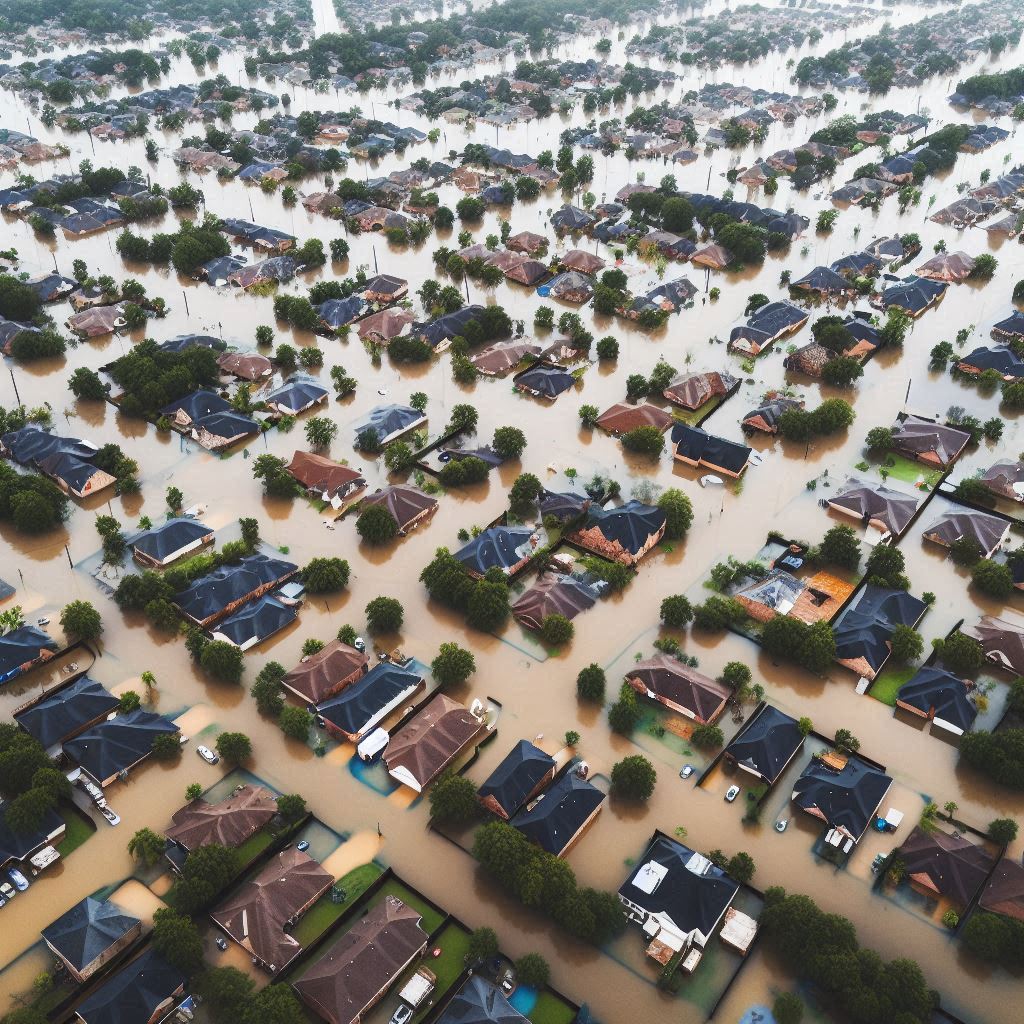
Flooding is one of the costliest natural hazards in Aotearoa-New Zealand, and with a warming climate is expected to become more frequent and more severe in the future. The dynamic and uncertain nature of flood hazards creates a fundamental challenge for urban planners, who are also facing intense pressure to fast-track urban development to fix problems of housing affordability. Projections of future flood hazards under alternative climate scenarios are available, but pairing those with current urban form fails to consider how future urban growth will change exposure, whether by new development, intensification, infrastructure investment, or greenspace strategies. In this research, we explore how long-term changes in urban morphologies might be envisioned under alternative future climate and flood scenarios, particularly if different paths for adaptation and mitigation are followed. The goal is to create a robust methodology for generating and then integrating urban futures with flood futures to provide a more comprehensive assessment of the uncertainties and inequalities of future flood risk.
2025 Research Update
A review of urban growth modelling (UGM) literature confirmed that UGM can generate future urban scenarios consistent with climate scenarios to support long-term spatial planning under climate uncertainty. However, the technical promise of UGM does not necessarily indicate its utility for spatial planning. A survey and interviews with Aotearoa-NZ practitioners revealed low awareness of UGM software capabilities, limited ability to use modelling tools, and a lack of advocacy at the institutional level in terms of financial support for modelling. We concluded that stronger direction from central government is required to create a robust methodology for integrating urban and climate futures. Decision-makers need UGM tools developed on a nationally consistent basis, and a mandate for longer-term, multi-scenario, risk-based spatial planning. Testing of UGM for long-term scenario generation is currently underway for a case study area in Aotearoa-NZ. We are investigating practical issues of data availability, spatial scale, temporal accuracy, transferability, and transparency of outputs for potential model users. Fitness-for-purpose for decision-making in planning is essential for UGM to support more flood-resilient planning that balances future development needs against sustainability and future flood risk.
Outputs:
Booker, K., White, I. and Wilson, M. Water Allocation and the Canterbury Land and Water Regional Plan. The Fourth Spatial Data Science Symposium. UoC, Christchurch, September 5, 2023. Poster.
Booker, K., White, I. and Wilson, M. Building Future Urban Development Scenarios into Assessments of Future Flood Risk. The Fourth Spatial Data Science Symposium. UoC, Christchurch, September 5, 2023. Poster.
Booker, K., White, I., Fu, X. and Wilson, M. (2025). Modelling urban growth for long-term planning under future climate uncertainty: A systematic review and decision pathway. Cities, 167, p.106310. https://doi.org/10.1016/j.cities.2025.106310