PhD Project
Regina Chua (GRI – UoC)
Sinead Moylett (UoC)
Lukáš Marek (GRI GeoHealth Lab – UoC)
Malcolm Campbell (FoH – UoC)
Toni Pitcher (New Zealand Brain Research Institute)
Daniel Myall (New Zealand Brain Research Institute)
Funding
2025 Geospatial Research Institute Scholarship
Duration
5 years
Project summary
The spatial epidemiology of neurodegenerative diseases, particularly Parkinson’s disease (PD), is an emerging area of research. Geographic variables may influence PD onset and progression, while environmental exposures such as air pollutants (nitrogen dioxide, PM10) and carcinogenic chemicals like trichloroethylene have been implicated in elevated PD risk. However, gaps in spatial data limit our understanding of these associations as well as in long-term health outcomes.
2025 Research Update:
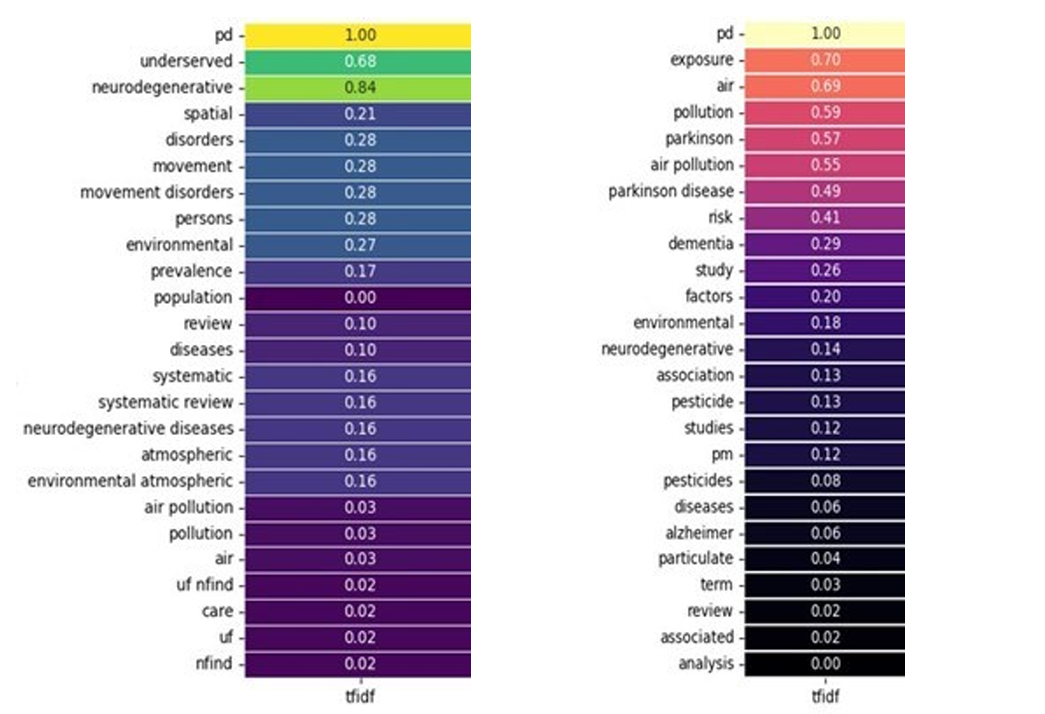
This systematic review synthesises current literature (2020-2025) on geographic and environmental risk factors associated with PD, with a focus on methodological innovation. Studies were identified through a targeted search of PubMed, augmented by a Natural Language Processing (NLP) pipeline using TF-IDF to improve the search and reduce noise.