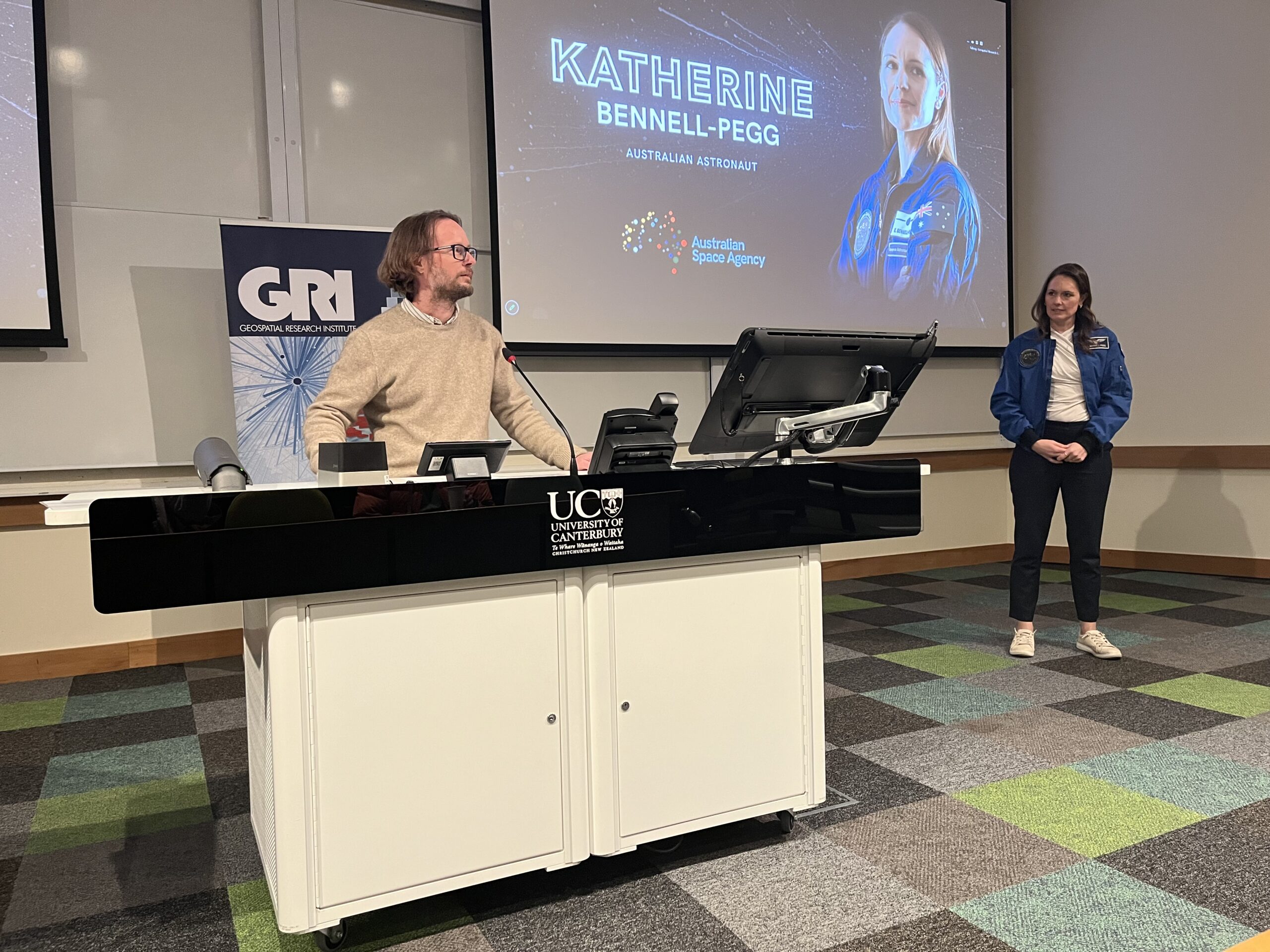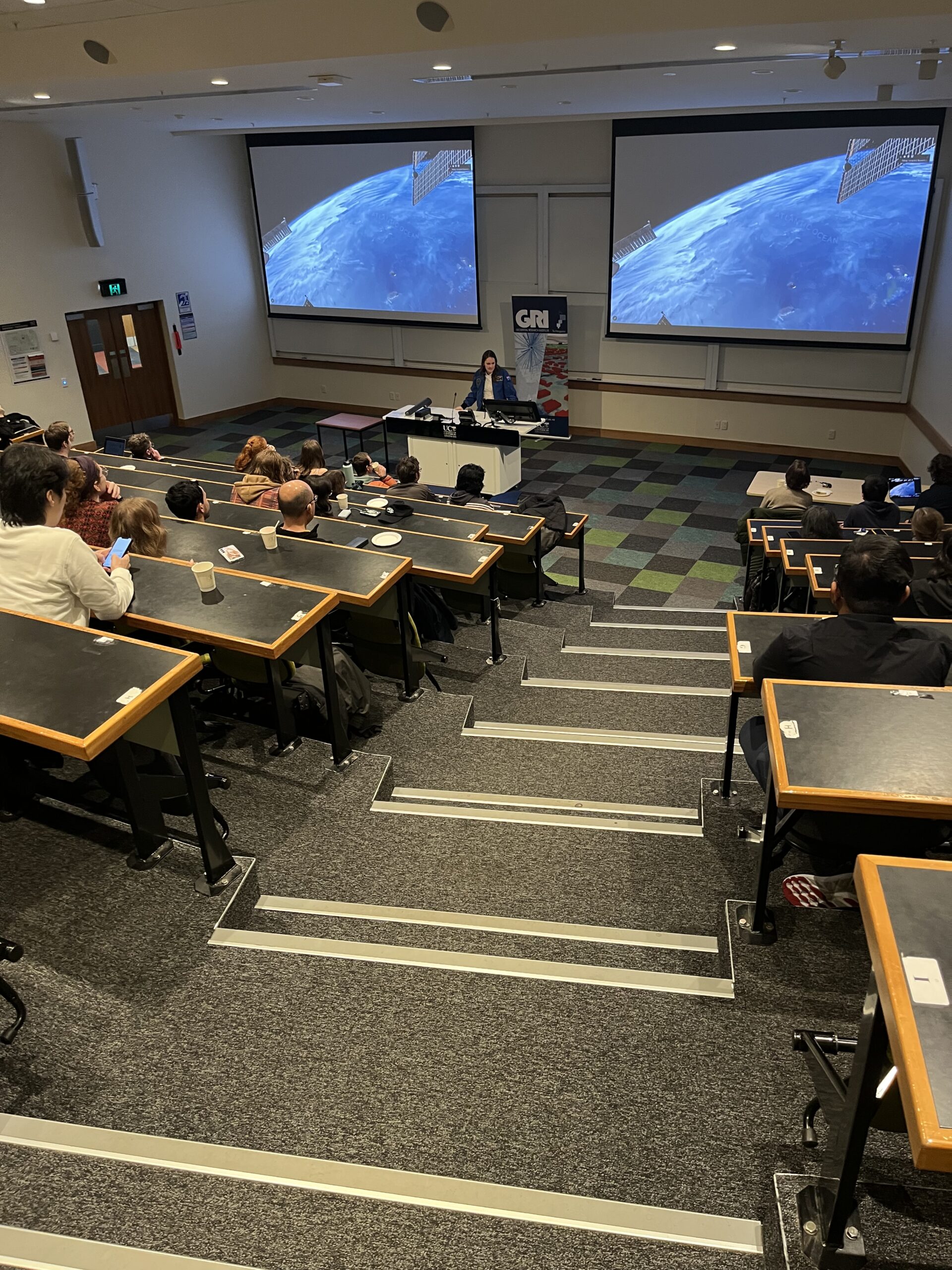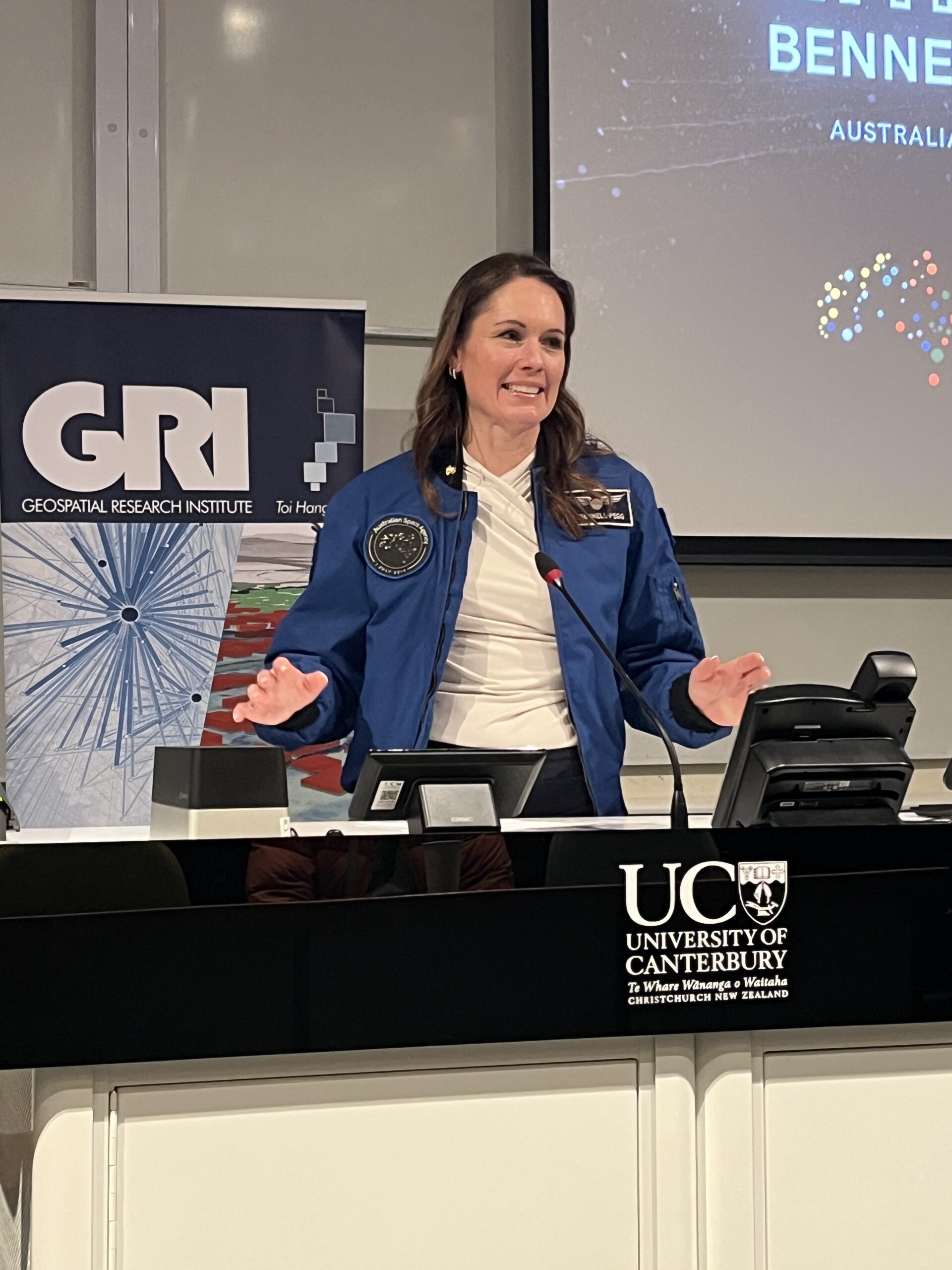
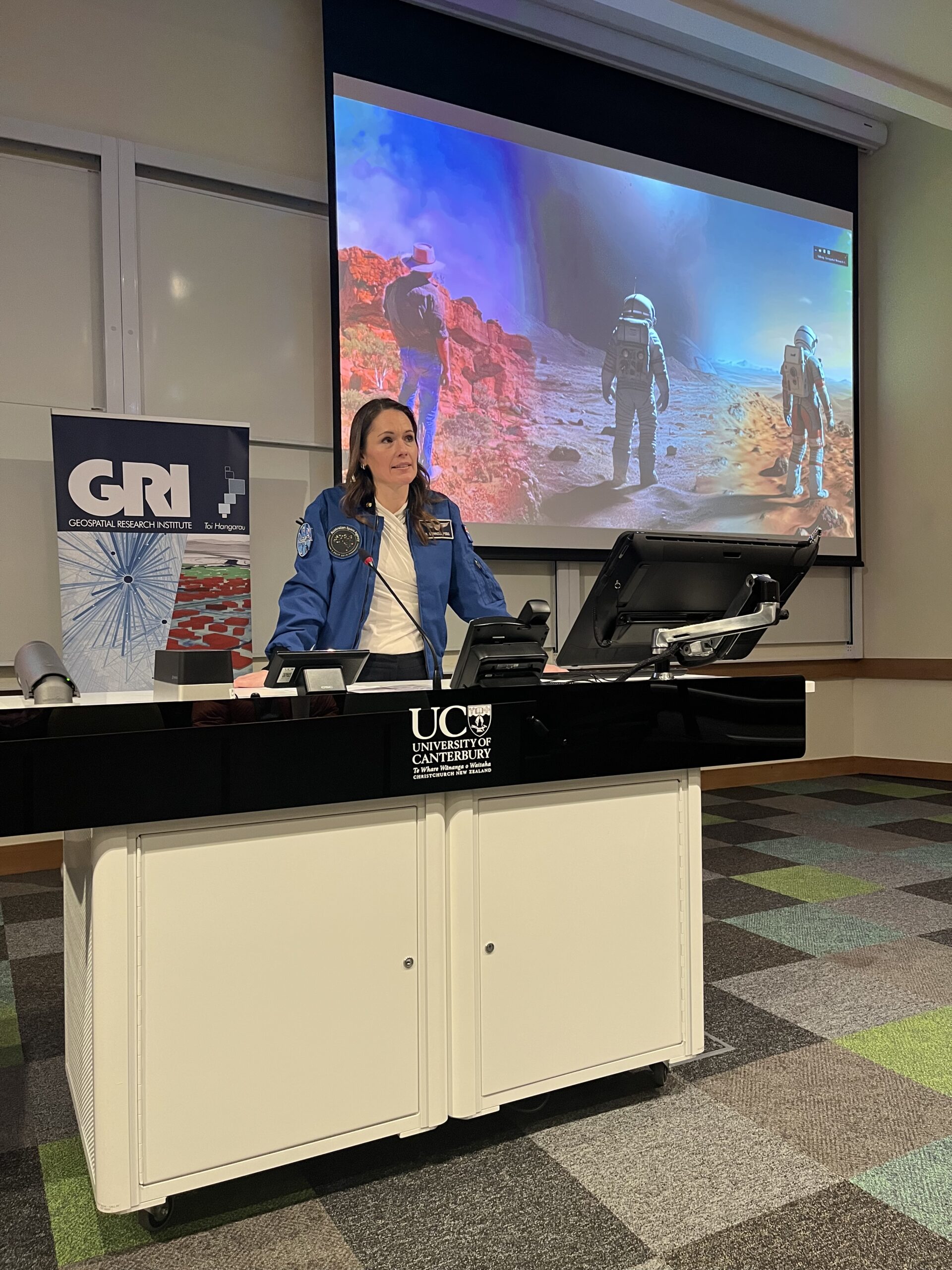
Christchurch, New Zealand — The Geospatial Research Institute Seminar Series (GRISS) brings specialists in different areas of geospatial information science to present the use of geospatial technologies in research and industry. This week, Astronaut Katherine Bennel-Pegg (Director at the Australian Space Agency) delivered an inspiring talk at the University of Canterbury outlining the future of space exploration, the realities of astronaut training, and the growing opportunities for New Zealand and Australia in the rapidly expanding space economy.
Speaking to students, researchers, and industry professionals, the space engineer and astronaut reflected on humanity’s enduring fascination with the cosmos and how modern space technology continues to transform life on Earth.
Space as “an Eye in the Sky”
Katherine opened by highlighting humanity’s long history of looking to the skies—once for navigation and survival, and now for advanced scientific insight. Images captured from the International Space Station (ISS), including views of New Zealand, were used to illustrate how space provides a unique perspective on Earth.
From orbit, national borders disappear, but environmental impacts such as pollution become strikingly visible. Astronauts, the audience heard, often return from missions with a renewed commitment to protecting the planet.
“Space isn’t just about exploration for its own sake,” Katherine said. “It’s about improving life on Earth.”
A Booming Global Industry
The presentation emphasised the economic importance of space, dispelling the myth that investment in space is wasteful. According to Katherine, every dollar spent on space programs generates significant returns—sometimes as much as sevenfold.
The global space economy is expected to grow dramatically in the coming decade, with New Zealand already playing a role through companies such as Rocket Lab.
However, Katherine noted that both New Zealand and Australia must move “from demonstration to operation” to fully capitalise on emerging opportunities and strengthen their positions in international markets.
The Vastness of the Universe
The talk also explored the scale of the universe, offering perspective on humanity’s place within it. With an estimated 400 billion stars in the Milky Way and potentially billions of Earth-like planets in habitable zones, the possibilities for discovery are immense.
“When you consider there may be up to two trillion galaxies in the universe,” Katherine said, “we are truly only at the beginning of understanding what’s out there.”
The Demands of Astronaut Training
A major focus of the event was the rigorous pathway to becoming an astronaut. Katherine detailed the competitive and multi-stage selection process undertaken through the European Space Agency (ESA), where nearly 23,000 applicants competed for a handful of positions.
Candidates must demonstrate:
- Advanced education in STEM fields
- Strong operational and decision-making skills
- Physical and mental resilience
- Experience in high-pressure environments
- Teamwork and “expeditionary behaviour”
Training itself includes everything from survival exercises and spacewalk simulations to language learning and high-gravity exposure in centrifuges.
“You are trained to be a generalist,” Katherine explained, “capable of working across science, engineering, and operations in one of the most extreme environments imaginable.”
Life in Space: Science and Survival
Life aboard the ISS, described as roughly the size of a soccer field, presents unique challenges. Astronauts must adapt to microgravity, where simple actions like eating and moving require careful planning.
The human body also undergoes significant changes in space. Without countermeasures such as daily exercise, astronauts can lose bone density at a rate of about 2% per month.
Despite these challenges, the ISS is a hub for groundbreaking research. More than 4,000 scientific papers have been published from experiments conducted there, contributing to advances in medicine, climate science, and materials engineering.
Katherine highlighted the importance of diversity in astronaut crews, noting that increased participation of women is critical for ensuring medical research benefits all populations.
Beyond Earth Orbit: Moon and Mars
Looking ahead, the talk explored future missions to the Moon and eventually Mars. The Artemis program aims to establish a sustained human presence on the lunar surface, serving as a stepping stone for deeper space exploration.
However, significant challenges remain—particularly in sustaining life on long-duration missions and managing the dangers of space, including radiation, isolation, and extreme environments.
“What we solve for space,” the Katherine said, “we often solve for Earth as well.”
Opportunities for Students
In closing, Katherine encouraged students to pursue careers in the space sector, stressing the importance of practical experience. Internships, international collaboration, and interdisciplinary skills were highlighted as key stepping stones.
“There are more opportunities than ever before. You can put ‘space’ in front of almost any field and build a career.”
A Call to Aim Higher
The visit concluded with a call for New Zealand and Australia to expand their ambitions in space.
“We’re already punching above our weight,” Katherine said. “Now it’s time to increase our weight class.”
With the possibility that the first human to walk on Mars could be in a classroom today, the message resonated strongly: the future of space exploration may well begin in places like Christchurch.